
Student Medical Checkup: What Parents and Schools Should Know
How a student medical checkup works at school, what parents can expect, how results are shared privately, and what to do when a follow-up is suggested.
Educure School Health editorial ·
General educational information, not an individual clinical assessment. No named clinical review is recorded for this article.
Why schools run student medical checkups
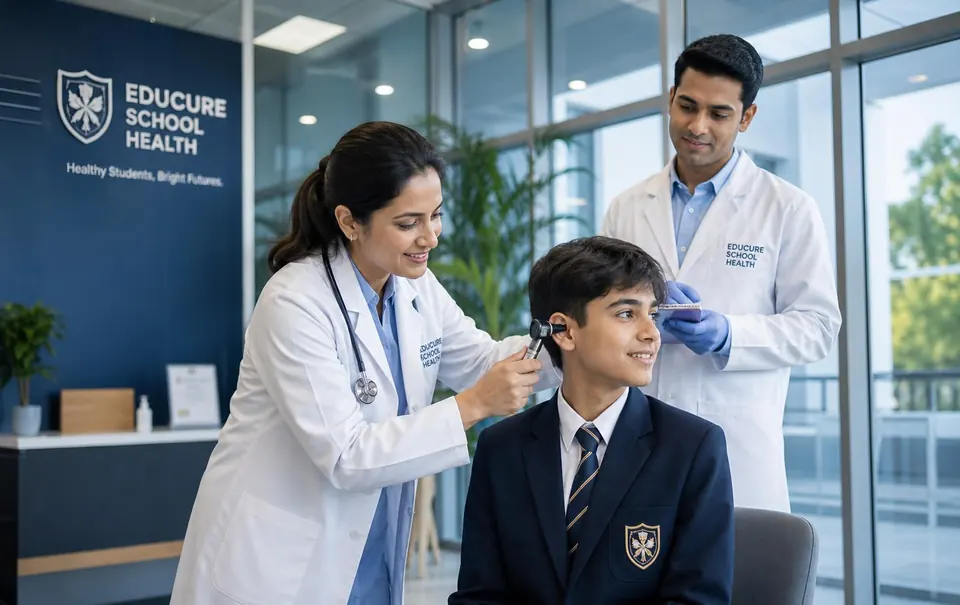
Children spend a large part of their day at school. A student medical checkup gives families and schools a regular chance to notice concerns that are easy to miss at home, such as difficulty seeing the board or dental problems.
The checkup supports, but never replaces, a child's own doctor.
What parents can expect
Before the checkup, the school should send a note explaining what will be checked, who will do it and how results will be shared. You will be asked for consent.
On the day, your child moves through short stations with their class. Each check is quick and non-invasive unless the school has told you otherwise.
Afterwards, you receive a private report for your child.
What is usually checked
Exact modules depend on the school and age group. Common checks include:
- Height, weight and BMI to understand growth.
- Vision screening for distance sight.
- Dental check for cavities and gum health.
- Ear, nose and throat examination.
- General physical examination, including skin and posture.
- Age-appropriate wellbeing questions for older students, where agreed.
Consent and privacy
Consent should be clear and voluntary. A parent who declines should not face any pressure.
Results are personal health information. Parents receive individual reports privately; teachers and management see only what they need, usually aggregate summaries.
Ask your school how records are stored and who can access them.
Reading your child's report
A good report separates normal results from items that need follow-up and explains each in plain words.
A follow-up suggestion does not mean something is definitely wrong. It means a qualified professional should take a closer look.
What to do when a follow-up is suggested
Take these steps calmly:
- Read the note and the suggested type of specialist.
- Book an appointment with your family doctor or the suggested specialist.
- Take the school report with you.
- Share any advice that affects school, such as glasses or care instructions, with the school nurse or class teacher.
What schools should prepare
Schools set the tone. Plan the calendar, appoint a coordinator, arrange private rooms and agree how parents receive reports.
Keep care instructions for children with known conditions updated before screening day, and make sure staff know the plan if a child feels unwell.
Keeping records year to year
A single checkup is a snapshot. Records kept over several years help families and clinicians see patterns in growth or vision.
Digital health records let parents view past reports privately and share them with their own doctor when needed.
When a checkup is part of a wider programme
A medical checkup works best when it connects to the rest of school life. Results can guide whether the school arranges a vision follow-up day, a dental awareness session or extra time with the counsellor.
When the school also has a clinic or nurse, they can help parents understand next steps and record advice that affects the school day, such as seating a child closer to the board.
Ask your school whether the checkup is a one-off event or part of a year-round plan, and how families are supported after the reports go out.
How to prepare your child
A little preparation makes the day easier, especially for younger children.
- Explain in simple words that a nurse or doctor will check their eyes, teeth and height, and that it does not hurt.
- Send them in comfortable clothes and with their spectacles if they wear them.
- Tell the school in advance about any medical condition, allergy or medicine.
- Make sure they have eaten breakfast and have a water bottle.
- Reassure them that they can ask questions or ask for a teacher to be nearby.
Questions parents can ask the school
It is reasonable to ask for clear answers before you sign consent.
- Which checks will my child have, and who will carry them out?
- Will a teacher or attendant be present for younger children?
- How and when will I receive the report?
- Who can see my child's individual results?
- Whom do I contact if I have questions about a finding?
Signs worth mentioning to your doctor between checkups
An annual checkup cannot catch everything. Speak to your child's doctor if you notice changes such as squinting at screens, frequent headaches, trouble hearing, tooth pain, unusual tiredness, or a big change in appetite, sleep or mood.
Trust your observations. You see your child every day, while a school checkup sees them for a few minutes once a year.
Where we run student medical checkups
Schools can see local planning notes for Mumbai, Delhi NCR, Bengaluru, Hyderabad, Chennai, Pune, Kolkata, Ahmedabad, Jaipur, Lucknow, Chandigarh, Surat, Indore, Bhopal, Nagpur and Kochi on our city pages.
Frequently asked questions
- Is the student medical checkup painful?
- Routine school checks are quick and non-invasive. The school should tell you in advance if anything else is included.
- Who sees my child's results?
- You receive your child's report privately. The school normally receives aggregate summaries, and access to individual records is restricted.
- Will my child miss lessons?
- Screening is done class by class to keep time away from lessons short.
- Can I share the report with our doctor?
- Yes. The report is yours to share with any clinician you choose.
- What if my child is absent on checkup day?
- Ask the school whether a catch-up session is planned. Otherwise, you can arrange the same checks with your family doctor.
- Do I have to pay separately for follow-up?
- Follow-up visits to your own doctor or a specialist are arranged and paid for by the family unless the school's programme states otherwise.
Plan school health checkup services for your school
Discuss your school's requirementsExplore our school health checkup services program for schools across India.
See School Health Checkup ServicesPrint the school health checklistRequest a Proposal for Your School
Tell us your school, city and requirement for school health checkup services. Our team will confirm scope, availability and quotation conditions.
More school health articles
Written by Educure School Health, which provides school health services. This is general planning guidance for schools and parents, not medical advice. A qualified clinician should assess any individual health concern.