
Best School Health Checkup Checklist for Students in India
A practical checklist for planning the best school health checkup: what to screen by age, how to prepare the campus, and what a good report should contain.
Educure School Health editorial ·
General educational information, not an individual clinical assessment. No named clinical review is recorded for this article.
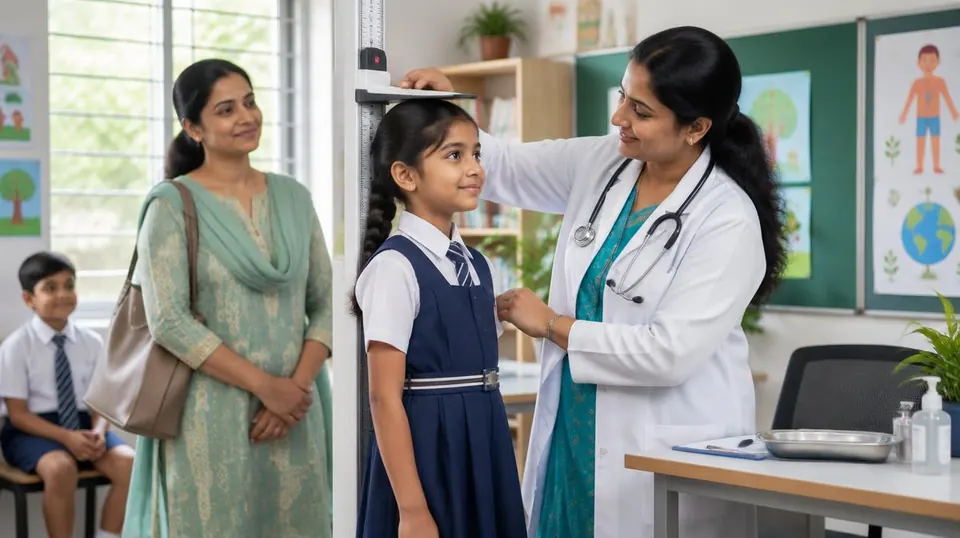
What makes a school health checkup the best one?
The best school health checkup is not the one with the most tests. It is the one that suits the age group, is done privately and respectfully, and leads to clear follow-up.
A checkup is a screening. It helps spot possible concerns so a family can see the right professional. It is not a diagnosis.
Use the checklists below before, during and after screening day.
Before the checkup: planning checklist
Settle these points at least a few weeks ahead.
- Confirm grades, enrolment and preferred dates that avoid exams and long holidays.
- Send parents a plain-language note on what will be checked and why.
- Collect consent, and record which families have declined.
- Gather existing care instructions for children with known conditions.
- Agree the languages used for forms and reports.
- Ask the provider for the qualifications of everyone examining students.
What to screen, by age group
Choose modules that suit each age. A provider should explain what each station involves and why it is included.
- Pre-primary: height, weight, general observation, vision and dental checks done gently and quickly.
- Primary: growth and BMI, vision, dental, ENT and a general examination.
- Middle school: the same core checks plus posture and fitness, with privacy for older children.
- Senior school: core checks plus age-appropriate wellbeing screening and adolescent health guidance.
Campus and room setup
Screening works best in quiet indoor rooms with good light, privacy screens and space for queues away from classrooms.
Move students class by class so they spend little time waiting. Keep drinking water nearby, especially in hot months.
For younger children, a teacher or female attendant should be present as agreed in the school's safeguarding policy.
- Separate stations for growth, vision, dental and general examination.
- A private area for older students and any sensitive checks.
- A teacher coordinator for each grade with a class list.
- A clear plan for a child who feels unwell on the day.
During the checkup
Explain each step to children in simple words. Never compare results aloud or discuss a child's findings in front of classmates.
Results should be recorded directly into a system or form that keeps them private and accurate.
What a good report includes
Ask your provider for a sample report before you book. A useful parent report:
- Shows each check with a clear normal or follow-up result.
- Explains follow-up items in plain language.
- Suggests the type of professional to see, such as an eye specialist or dentist.
- Is shared privately with the family, digitally or on paper.
- Leaves the school with an aggregate summary, not named medical details.
After the checkup: follow-up checklist
Follow-up is where most checkups succeed or fail. Agree in advance who reminds parents, how referrals are tracked and when the school reviews progress.
Use the school-level summary to plan awareness sessions or decide whether a clinic or counsellor is needed.
Questions to ask your provider
Use these to compare quotations fairly.
- Who examines students, and what are their qualifications?
- Which modules are included for each age group?
- How is consent collected and privacy protected?
- When will reports arrive, and in which languages?
- What follow-up support is included?
- What is not included in the price?
Common mistakes to avoid
Schools that are new to screening often repeat the same avoidable errors.
- Booking on a date that clashes with exams, sports day or festivals.
- Sending consent forms too late for parents to read them properly.
- Running checks in a noisy corridor without privacy.
- Accepting reports that list numbers with no explanation for parents.
- Treating the checkup as finished once the provider leaves, with no follow-up plan.
Communicating results to parents
Parents should receive results privately and in a language they understand. A short covering note helps: it explains that the checkup is a screening, what a follow-up item means and where to go next.
Give families a contact for questions, such as the school nurse or the provider's helpline, and a reasonable time frame for follow-up.
Never share a child's results in a class group chat or notice board.
Using the school summary
An aggregate summary shows patterns without naming children, for example how many students in a grade were advised an eye check.
Management can use it to plan awareness sessions, adjust the clinic's focus or decide when to repeat specific checks next year.
Checkups across India
Weather, school calendars and travel affect planning. A monsoon city may prefer different months from a hot inland city.
Schools can see local planning notes for Mumbai, Delhi NCR, Bengaluru, Hyderabad, Chennai, Pune, Kolkata, Ahmedabad, Jaipur, Lucknow, Chandigarh, Surat, Indore, Bhopal, Nagpur and Kochi on our city pages.
Frequently asked questions
- How often should students have a school health checkup?
- Many schools run one annually. Your board's guidance and the school's own needs decide the frequency.
- Does a checkup diagnose illness?
- No. It is a screening that flags possible concerns for a family to follow up with a qualified professional.
- How long does screening take per student?
- It depends on the modules chosen. Your provider should give a per-class schedule in the proposal.
- Can parents refuse the checkup?
- Yes. Consent is voluntary, and schools should record and respect a parent's decision.
- What is the best time of year for a school health checkup?
- Early in the academic year usually works well, because results can guide support for the rest of the year. Avoid exam weeks and extreme weather.
- Should staff be checked too?
- Some schools add staff health checks alongside students. This is optional and agreed separately in the proposal.
Plan school health checkup services for your school
Discuss your school's requirementsExplore our school health checkup services program for schools across India.
See School Health Checkup ServicesPrint the school health checklistRequest a Proposal for Your School
Tell us your school, city and requirement for school health checkup services. Our team will confirm scope, availability and quotation conditions.
More school health articles
Written by Educure School Health, which provides school health services. This is general planning guidance for schools and parents, not medical advice. A qualified clinician should assess any individual health concern.