
Student Fitness Assessment in Schools: What Parents and Principals Should Know
What a school fitness test in India measures, how to run it safely, how to share results with parents and why it is a screening, not a medical diagnosis.
Educure School Health editorial ·
General educational information, not an individual clinical assessment. No named clinical review is recorded for this article.
Why fitness assessment belongs in school health
The World Health Organization recommends that children and adolescents aged 5–17 do an average of at least 60 minutes a day of moderate-to-vigorous physical activity, mostly aerobic, and that they limit sedentary time, especially recreational screen time. Many children fall short of this, and schools are one of the few places where activity levels can be encouraged and measured for every child.
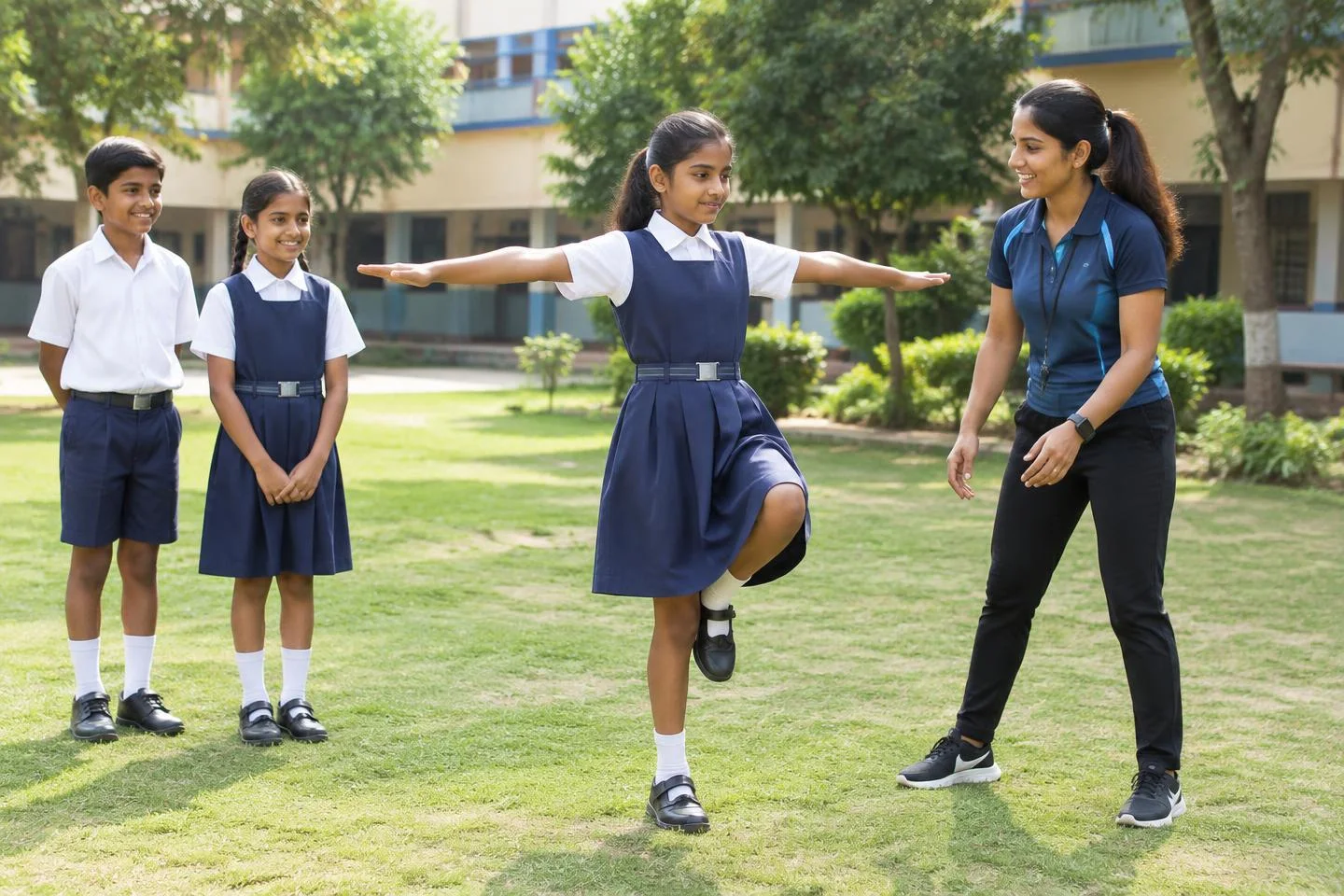
A student fitness assessment gives schools and parents a simple picture of where a child stands today: how far they can run, how flexible they are, and how their strength and balance are developing. Repeated each year, it shows trends that a single sports day cannot.
What a school fitness test usually measures
Test batteries vary, but most school fitness tests in India include a mix of the following:
- Body composition, using height, weight and BMI for age.
- Endurance, such as a timed run or walk-run.
- Speed and agility, using short sprints or shuttle runs.
- Flexibility, such as a sit-and-reach test.
- Muscular strength and endurance, such as push-ups, planks or a standing broad jump.
- Balance and coordination, especially for younger children.
A note on norms and official programmes
Government initiatives such as the Fit India Movement encourage schools to promote fitness, and some programmes publish their own test protocols. Schools should use the current official material directly if they want to follow a particular programme. Results from a private school assessment should be presented as a screening against the provider's own reference bands, not as an official national score.
Running the assessment safely
A fitness assessment should feel like a positive activity, not an exam. Good practice includes:
- Informing parents in advance and asking them to share any medical conditions, such as asthma or heart concerns.
- Starting each session with a warm-up and keeping water available.
- Having trained staff supervise every station, with first aid on hand.
- Allowing children with injuries or medical advice against exercise to sit out without pressure.
- Avoiding public comparison of results, especially body weight and BMI.
Sharing results with parents and acting on them
Each family should receive a short report showing their child's results, what each test measures and simple suggestions for activities at home. The language should be encouraging and avoid labels. Where a result raises a health concern — for example, a child who becomes unusually breathless — the report should suggest that parents consult a qualified doctor.
Reports should also explain that fitness changes with growth. A child who has just had a growth spurt may score lower for a while, and younger children within a class can be at a natural disadvantage. Presenting results as a starting point for healthy habits — more outdoor play, less recreational screen time and regular sleep — keeps the message positive and practical for families.
For principals, a class-level summary can guide decisions on PE time, sports clubs and playground use. Comparing the same class across years is more meaningful than ranking individual children.
Building activity into the school day
An assessment only helps if it leads to change. Schools can use results to plan more active breaks, protect PE periods during exam season and open playgrounds before or after school. Simple ideas — walking to assembly, short movement breaks between lessons and a range of sports clubs that suit children who are not competitive — can raise activity without large costs.
Children who score lower in one area often benefit most from encouragement rather than extra testing. Setting personal goals, such as improving their own run time by the next term, keeps the focus on progress instead of comparison with classmates.
Linking fitness with nutrition and wellbeing
Physical fitness is closely connected with diet, sleep and mental wellbeing. A child who skips breakfast or sleeps late may tire quickly during a run. Combining a fitness assessment with nutrition awareness and, where needed, conversations with the school counsellor gives a fuller picture of a child's health.
Principals can review fitness summaries alongside annual health checkup findings to decide where to focus — for example, more activity for classes with high screen time, or healthier canteen options. Any individual health concern should still be discussed with a qualified doctor.
How Educure's programme supports schools
Educure's student fitness assessment measures agility, strength, speed, flexibility and BMI, with results shared with parents and a summary for the school. Scoring is approximate and intended for screening and programme suggestions; it is not an official Khelo India or Fit India norm and is not a medical diagnosis.
If your school would like to add fitness screening to its health calendar, you can request a proposal and our team will confirm the format and schedule.
Frequently asked questions
- How often should schools run a fitness assessment?
- Once or twice a year is common, so results can be compared over time.
- Is a low score a sign that my child is unwell?
- Not necessarily. Fitness depends on age, growth and activity. If you are concerned, consult a qualified doctor.
- Are the results official Khelo India or Fit India scores?
- No. Educure's programme uses its own screening bands. For official protocols, use the government programme's current material.
- Can a child with asthma take part?
- Often yes, with the doctor's advice and their inhaler at hand. Parents should tell the school about any condition beforehand.
Sources and further reading
General information for schools and parents, not medical advice. Consult a qualified professional about an individual child.
Plan student fitness assessment for your school
Discuss your school's requirementsExplore our student fitness assessment program for schools across India.
See Student Fitness AssessmentSchool health planning checklistRequest a Proposal for Your School
Tell us your school, city and requirement for student fitness assessment. Our team will confirm scope, availability and quotation conditions.
More school health articles
This article was written by Educure School Health, which provides school health services. It is general information, not medical advice. Please consult a qualified doctor about any individual child's health.