Student Mental Health and School Counselling in India: What Works
What makes school counselling effective in India: clear roles, confidentiality, teacher awareness, early support and referral to qualified professionals.
Educure School Health editorial ·
General educational information, not an individual clinical assessment. No named clinical review is recorded for this article.
Why student mental health needs a plan
The World Health Organization reports that one in seven adolescents aged 10–19 worldwide experiences a mental disorder, and that half of all mental health conditions start by the age of 14, many going undetected and untreated. Children spend much of their day in school, so teachers are often the first adults to notice when a student withdraws, struggles to concentrate or changes in behaviour.
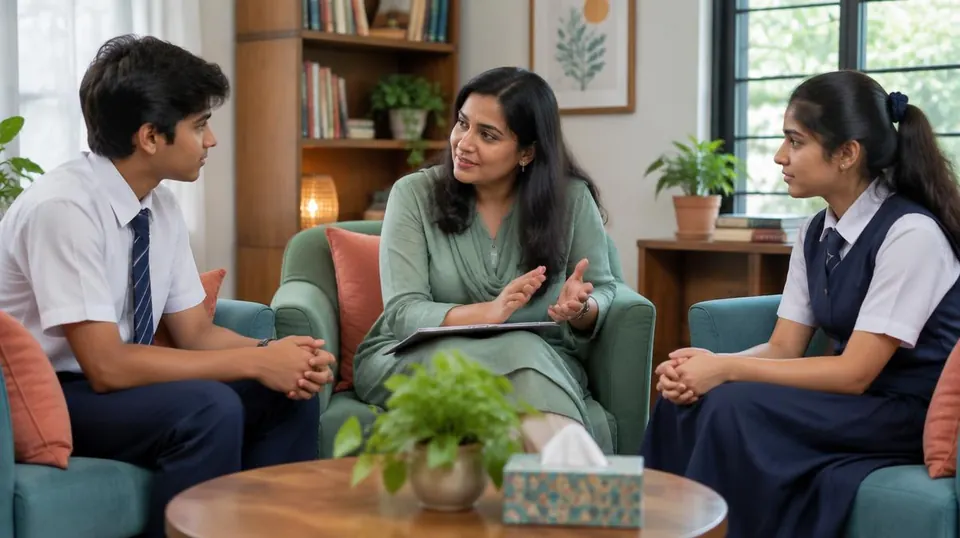
A school counsellor in India is not a replacement for a psychiatrist or clinical psychologist. Their role is to offer early, confidential support, help students build coping skills, guide teachers and parents, and recognise when a child needs referral to a qualified professional.
What NEP 2020 says about counselling
The National Education Policy 2020 places emphasis on the socio-emotional wellbeing of students. It refers to the use of counsellors and trained social workers, and allows school complexes to share these resources. It does not create a blanket rule that every school must employ a full-time in-house psychologist. Board and state rules can add their own requirements, so schools should check the guidance that applies to them.
What works in school counselling
Schools that see real benefit from counselling tend to share a few features:
- A trained, qualified counsellor who is available on a predictable schedule, not only during a crisis.
- A private, quiet space where students can talk without being overheard.
- Clear confidentiality rules that students and parents understand, including the limits when a child's safety is at risk.
- Teacher awareness, so staff know common warning signs and how to refer a student kindly.
- Group sessions on topics such as exam stress, friendships, online safety and bullying.
- A written referral pathway to psychologists, psychiatrists or paediatricians when needed.
- Regular contact with parents, with the student's consent where appropriate.
Common challenges schools face
Stigma remains one of the biggest barriers. Some students avoid the counsellor's room because they worry classmates will see them, and some parents worry that seeing a counsellor means something is seriously wrong. Making counselling a normal part of school life — through class visits, open sessions and simple language — helps reduce this.
Language and culture matter too. Students may describe stress in terms of physical complaints, family duty or exam results rather than feelings. A counsellor who understands the local context, speaks the languages students use and respects family values will be trusted more quickly. Schools should also make sure counselling is available to every student, including those in younger classes and those with disabilities, not only to senior students preparing for board exams.
Another challenge is workload. A single counsellor for a large school cannot meet every student individually. Combining group sessions, teacher training and targeted one-to-one support makes better use of the time available.
Warning signs teachers and parents can watch for
No single sign means a child has a mental health condition, but these changes are worth a gentle conversation and, if they continue, a referral to the counsellor:
- Withdrawal from friends or activities the child used to enjoy.
- Sudden changes in sleep, appetite or school performance.
- Frequent complaints of headaches or stomach aches without a clear cause.
- Expressions of hopelessness, or talk of self-harm — which needs urgent attention from a qualified professional.
Working with parents and teachers
Counselling works best when the adults around a child pull in the same direction. Short workshops for teachers on listening skills, classroom stress and how to respond to a student in distress help staff feel confident rather than anxious. Teachers do not need to become counsellors; they need to know how to notice, respond kindly and refer.
Parents also benefit from guidance. Sessions on screen time, sleep, exam pressure and talking about feelings at home give families practical tools. When a student is receiving counselling, the counsellor should agree with the student how and when parents will be involved, except where safety requires immediate contact.
Records, privacy and measuring impact
Counselling notes are sensitive. They should be stored securely, kept separate from academic records and shared only with people who need them. Schools can still track the programme's reach without breaching privacy — for example, the number of sessions held, the topics covered in group workshops and how many referrals were completed.
Reviewing these figures each term, alongside feedback from students and teachers, helps a school decide whether it needs more counsellor hours, more group sessions or stronger links with outside professionals.
How Educure's programme supports schools
Educure's school counselling services provide qualified counsellors and child psychologists for schools, with one-to-one sessions, group workshops, teacher guidance and parent communication. Referrals to external specialists are made when a student needs more than school-based support.
If your school is planning or reviewing its counselling support, you can request a proposal and our team will confirm the schedule and scope for your campus.
Frequently asked questions
- Is a school counsellor the same as a psychologist?
- Not always. A counsellor offers guidance and early support; a clinical psychologist can assess and treat mental health conditions. Schools should know when to refer.
- Will the counsellor tell parents what my child says?
- Counselling is confidential, with limits. If a child's safety is at risk, the counsellor must involve parents and appropriate professionals.
- Does NEP 2020 require a psychologist in every school?
- No. NEP 2020 supports counsellors and trained social workers and allows schools to share them across a school complex.
- What should I do if my child talks about self-harm?
- Treat it seriously and seek help from a qualified doctor or mental health professional straight away.
Sources and further reading
- Mental health of adolescents — World Health Organization fact sheet
- National Education Policy 2020 — Ministry of Education, Government of India
General information for schools and parents, not medical advice. Consult a qualified professional about an individual child.
Plan school counsellor services for your school
Discuss your school's requirementsExplore our school counsellor services program for schools across India.
See School Counsellor ServicesCounselling and school health compliance guidanceRequest a Proposal for Your School
Tell us your school, city and requirement for school counsellor services. Our team will confirm scope, availability and quotation conditions.
More school health articles
This article was written by Educure School Health, which provides school health services. It is general information, not medical advice. Please consult a qualified doctor about any individual child's health.