What Should a School Clinic Include?
An overview of the spaces, staffing and basic facilities that make a school clinic useful for students, parents and teachers.
By Educure School Health ·
The purpose of a school clinic
A school clinic is generally meant to handle everyday health needs: a child feeling unwell during class, a minor fall during sports, a routine check during an annual health screening, or a quiet space for a student who needs to rest before a parent arrives. It is not a hospital or a diagnostic centre, and schools do well to be clear about that distinction with staff and parents.
Because the clinic serves such varied, everyday purposes, its layout and facilities should be simple and functional rather than elaborate. A clear sense of what the clinic is for helps schools decide what to include and what to leave out, so the space stays usable rather than cluttered.
Space and layout considerations
Ideally a school clinic is located somewhere reasonably accessible, such as near the ground floor or close to the main office, so that a student who is unwell does not need to walk far or climb multiple flights of stairs. It should be away from the busiest, noisiest parts of the school so a resting child is not constantly disturbed.
Within the room, a resting area, a small examination or consultation corner, and a space to store supplies and records separately are usually enough for most schools. Schools with larger student numbers may find it useful to have more than one resting bed, or a slightly larger room, simply because more students may need attention during the day.
Staffing the clinic
Many schools in India staff their clinic with a nurse or trained attendant who is present during school hours to handle first aid, monitor students who are unwell, and coordinate with parents when needed. Some schools also arrange for a doctor to visit periodically or be available on call for situations that need more than basic first aid.
Clear roles matter here: the person staffing the clinic should know what they are expected to handle on their own, such as a minor cut or a headache, and when they should involve a parent, the school administration, or outside medical help. Written guidance helps avoid confusion during a busy or stressful moment.
Records and communication with parents
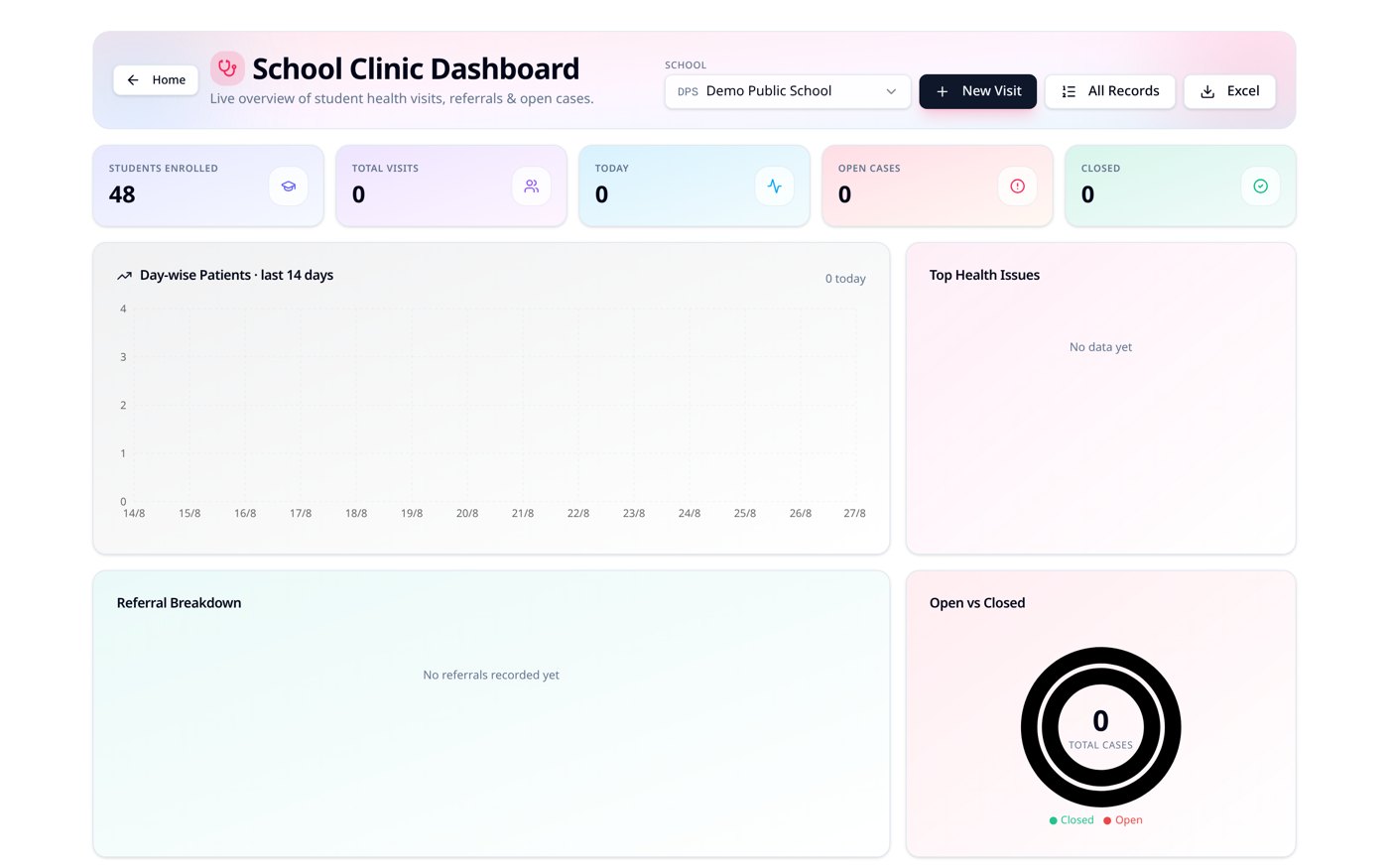
A good school clinic keeps a simple record of each visit, including the date, the student's name, what the complaint was, and what action was taken. Over time, this record can help the school notice patterns, such as a student who visits frequently, which may be worth a conversation with the parents.
Communication with parents matters as much as the physical setup. When a child visits the clinic for something more than a trivial complaint, parents generally appreciate being informed the same day, even with a short message, rather than hearing about it only when the child mentions it at home.
How Educure can support your school clinic
Educure's School Nurse Services are built to help schools run their clinic smoothly: trained nurse staffing for daily coverage, support with infirmary management and supplies, doctor-on-call access for situations beyond basic first aid, and digital records of student visits that are easy for the school and parents to access.
If you are setting up a new school clinic or reviewing an existing one, you can request a proposal from Educure to understand how staffing and record-keeping support could work for your school.
Bring this program to your school
Explore our school nurse services program for schools across India.
See School Nurse ServicesRequest a Proposal for Your School
Tell us your school, city and requirement. Our team will respond within 24 hours.