What Does a Student Health Checkup Include?
A clear look at what a typical student health checkup covers in Indian schools, and how principals and parents can use the results.
By Educure School Health ·
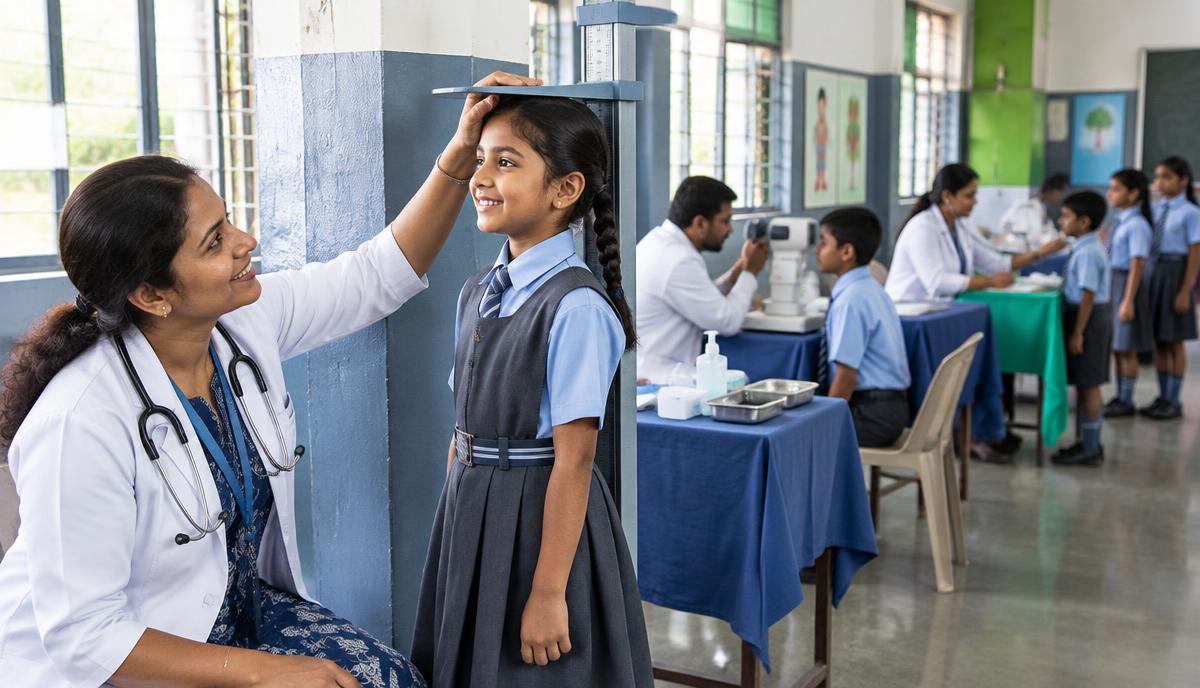
Why schools conduct student health checkups
A student health checkup is a scheduled, school-wide screening in which a qualified team reviews a child's basic health indicators on a single day, usually once a year. The idea is simple: catch common issues like poor vision, dental problems or growth concerns early, while they are easy to address, rather than letting them sit unnoticed for months and quietly affect a child's learning and attendance.
For most Indian schools, this is not an optional extra. CBSE's Affiliation Bye-Laws, under Clause 14.6, expect affiliated schools to arrange a medical checkup for students at least once a year and to maintain proper records of the findings. A well-run checkup day helps a school meet this expectation while giving families genuinely useful information about their child.
The core components of a typical checkup
Most school health checkups begin with basic anthropometry — height, weight and BMI — plotted against age-appropriate growth expectations. This is followed by a general physical examination covering skin, posture and visible signs of illness, along with checks on hearing and a brief look at the throat, ears and nose. Many programs also record blood pressure for older students and ask simple questions about diet, sleep and physical activity.
Vision and dental screening are usually included as separate stations, since these two areas account for a large share of the issues found in Indian school populations. Depending on the program's scope, schools may also include a basic nutritional assessment, a check of immunisation records, and a short conversation about any ongoing health concerns the family has already flagged.
What a checkup is — and what it is not
It is important for principals and parents to be clear about the limits of a school checkup. This is a screening exercise, not a diagnostic one. A doctor noting that a child may have reduced vision, a cavity or an irregular BMI is flagging something worth a closer look, not confirming a medical diagnosis. Final diagnosis and treatment always require a visit to the family's own doctor, dentist or eye specialist.
Organisations such as the WHO have long emphasised that school-based screening works best as the first step in a referral pathway, not as a substitute for clinical care. India's Rashtriya Bal Swasthya Karyakram (RBSK) follows the same logic in government schools, screening children and then referring those who need further evaluation. School checkups in private schools are generally modelled on this same screen-then-refer approach.
How results are shared and used
After the checkup, findings are typically compiled into an individual report for each student and shared with parents, along with a summary report for the school. A good report avoids medical jargon and instead tells a parent plainly what was observed and what the suggested next step is — for example, an eye test, a dental visit, or simply a note that nothing of concern was found.
Schools benefit from this data too. Aggregated, anonymised findings can show the school where to focus — more hydration breaks, a review of canteen food, or a hygiene awareness session — and build a multi-year health record for each student that supports continuity of care as children move up through grades.
Planning a checkup for your school
If your school is organising its annual medical checkup, it helps to work with a team that plans the stations, brings qualified professionals, and delivers digital reports to parents quickly rather than leaving paper records to be chased down later. This also makes it far easier to show Clause 14.6 compliance when it is time for affiliation renewal.
Educure's School Health Checkup program is built around exactly this workflow — structured screening stations, individual parent reports and a school-level summary your team can act on. If you are planning a checkup for the coming term, visit Educure's School Health Checkup page and request a proposal to see how it would work for your campus.
Bring this program to your school
Explore our school health checkup services program for schools across India.
See School Health Checkup ServicesRequest a Proposal for Your School
Tell us your school, city and requirement. Our team will respond within 24 hours.