School Nurse vs School Doctor
A clear look at how the roles of a school nurse and a visiting school doctor differ, and how schools typically use both.
By Educure School Health ·
Two different roles with the same goal
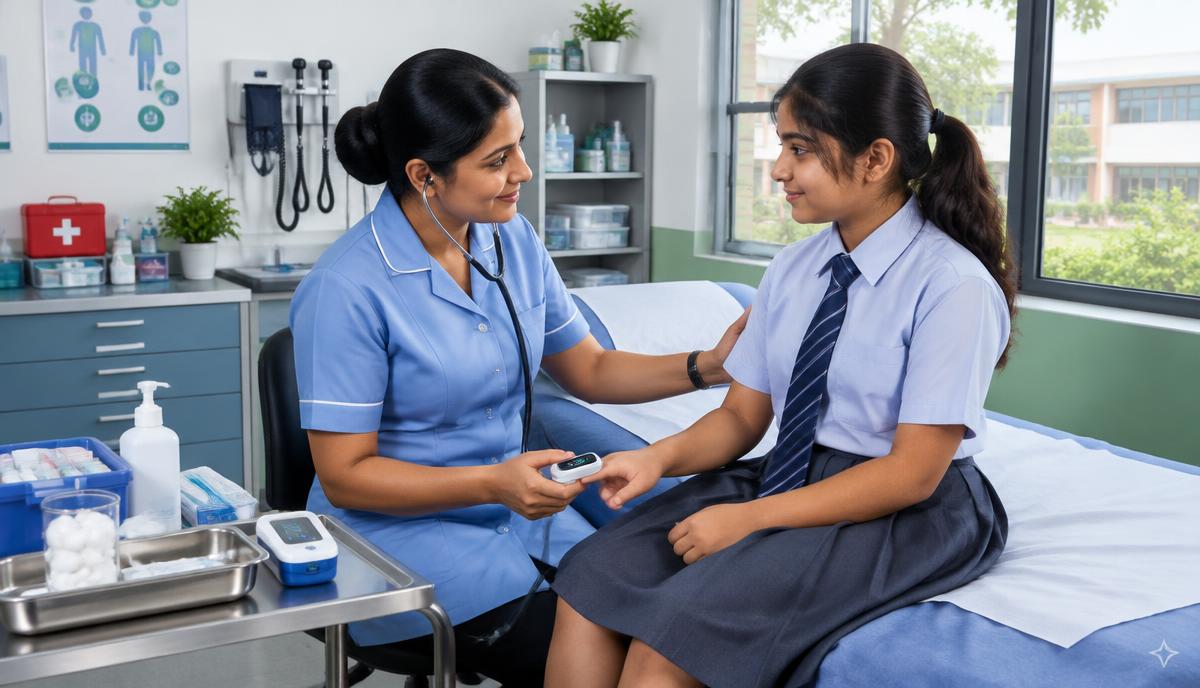
Schools often use the words nurse and doctor loosely, but the two roles usually work quite differently in practice. A school nurse is typically present on campus during school hours, handling everyday first aid and monitoring students. A school doctor is more often a visiting professional who comes periodically, such as for the annual health check-up, or is available on call for situations that need more clinical judgement than first aid.
Both roles share the same underlying goal of keeping students safe and healthy at school, but understanding the difference helps a school plan its staffing sensibly instead of assuming one role can fully substitute for the other.
What a school nurse generally handles
A school nurse usually manages the day-to-day medical room: first aid for cuts, falls and minor injuries, monitoring a child who feels unwell, keeping a visit log, and communicating with parents about what happened. Because they are present throughout the school day, they are often the one who notices a pattern, such as a student visiting the clinic repeatedly over a few weeks.
A nurse's role is largely about care, observation and first-level response rather than diagnosis. When something seems beyond routine first aid, a nurse's job is to recognise that and know who to call next, whether that is a parent, the school administration, or a doctor.
What a school doctor generally handles
A school doctor typically becomes involved for the annual medical check-up, which many CBSE schools arrange in line with CBSE's Affiliation Bye-Laws Clause 14.6, and for situations that call for clinical assessment beyond first aid. Some schools arrange a doctor to be available on call, so the nurse or school staff can reach them by phone for advice on a specific case.
Because a doctor's time on campus is usually more limited than a nurse's, schools generally rely on the nurse to prepare for a doctor's visit, such as organising students by class for a check-up, and to pass along information afterward so follow-up with parents happens smoothly.
How schools typically combine the two
Most schools that take student health seriously use a combination: a nurse for daily presence and routine care, and a doctor for periodic check-ups or on-call support when something more serious comes up. Neither role is meant to replace the family's own doctor for ongoing treatment; the school's role stays focused on first response, monitoring and clear communication.
Deciding how much nurse time and doctor access a school needs often depends on student numbers, the age group, and how often the school expects to see health concerns, which is a conversation worth having directly with a staffing partner rather than guessing.
Planning your school's nurse and doctor coverage
Educure's School Nurse Services can help schools plan the right mix of trained nurse staffing and doctor-on-call access, alongside support with infirmary management and digital records of student visits that keep everyone informed.
If your school is deciding how to structure its nurse and doctor coverage, you can request a proposal from Educure to talk through what would work for your campus and student numbers.
Bring this program to your school
Explore our school health checkup services program for schools across India.
See School Health Checkup ServicesRequest a Proposal for Your School
Tell us your school, city and requirement. Our team will respond within 24 hours.