Dental Health Screening in Schools
A look at why dental screening matters for school-age children in India, what it covers, and how schools can act on the findings.
By Educure School Health ·
Why dental health is a classroom issue too
Dental problems are one of the more common findings in school health screenings across India, and they are rarely purely a cosmetic concern. Untreated cavities and gum problems can cause pain that distracts a child during lessons, disrupts sleep, and in some cases leads to missed school days for dental visits that could have been simpler and shorter had the problem been caught earlier.
Children, especially younger ones, often do not report dental discomfort clearly or may not realise that occasional tooth sensitivity is worth mentioning. A dedicated dental screening station gives every student a chance to be checked, regardless of whether a complaint has been raised at home.
What a school dental screening typically covers
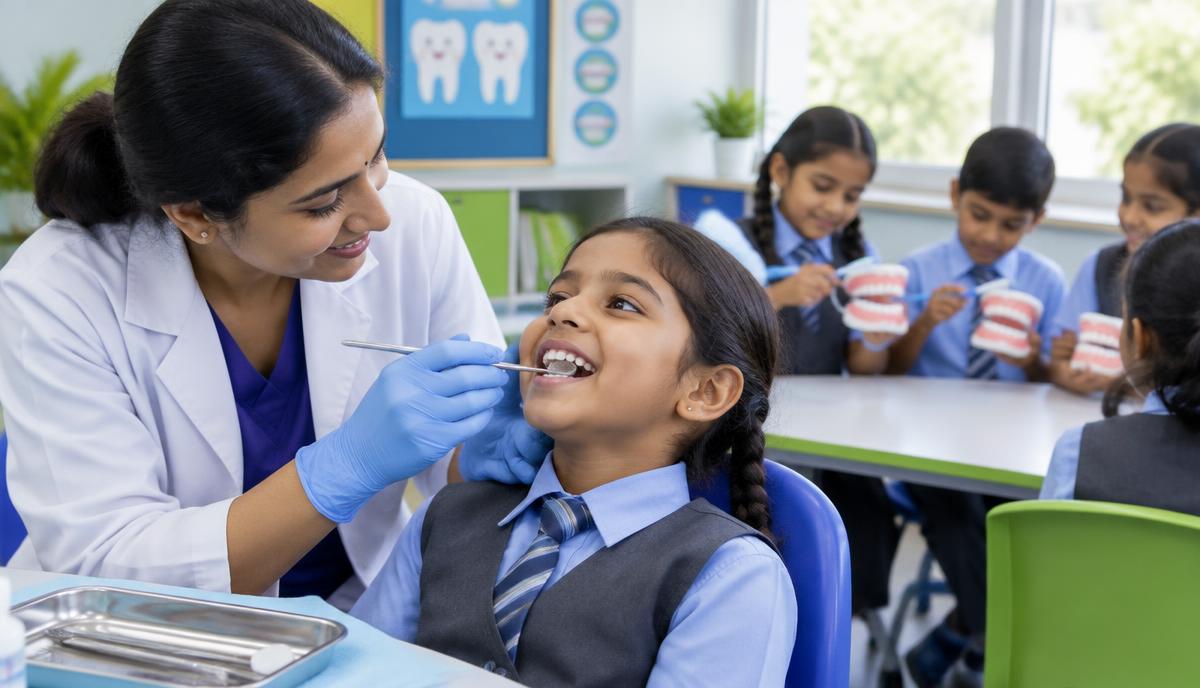
A standard school dental screening involves a visual examination of the teeth and gums, usually with a dental mirror and good lighting, looking for visible cavities, discolouration, gum inflammation, plaque build-up and signs of early tooth decay. The screener may also ask simple questions about brushing habits and recent dental pain.
As with other school screenings, this is not a substitute for a full dental check-up with X-rays or a proper clinical examination. It is designed to identify students who would benefit from a dentist's visit, and the final assessment and any treatment always sit with a qualified dental professional.
Turning findings into follow-up visits
The real value of dental screening comes from what happens after the screening day. Parents of flagged students should receive a clear, specific note — for example, that a particular tooth showed signs of decay and should be examined by a dentist soon — rather than a vague mention that some dental issues were noted.
Schools can support follow-through by keeping the report simple and actionable, and by pairing it with a brief oral hygiene reminder for the whole school, such as a short session on brushing technique and the importance of limiting sugary snacks, which benefits every student regardless of their individual screening result.
Building good habits alongside screening
Screening identifies existing problems, but prevention is just as important for long-term oral health. Many schools pair their dental screening with basic oral hygiene education — correct brushing technique, the value of regular brushing twice a day, and awareness of how frequent sugary snacks and drinks affect dental health.
This combination of screening and awareness tends to be more effective over several years than screening alone, since it addresses both the students who already have a problem and the broader habits that determine whether new problems develop.
Making dental screening part of your annual checkup
Given how common dental issues are among school-age children, a dental station is a natural and valuable part of any annual health checkup, alongside vision, growth and general physical screening. Consistency from year to year also helps track whether a flagged issue was actually followed up on.
Educure's School Health Checkup program includes dental screening with clear, individual parent reports and a school-level summary your team can use to plan awareness sessions. To include dental screening in your school's next checkup, visit Educure's School Health Checkup page and request a proposal.
Bring this program to your school
Explore our school health checkup services program for schools across India.
See School Health Checkup ServicesRequest a Proposal for Your School
Tell us your school, city and requirement. Our team will respond within 24 hours.